Floral Rebound
An Immersive Installation
- Year
- 2026
- Type
- Minor Immersive Arts
- Context
- ZHdK, MA Interaction Design
- Location
- Zürich, CH
- Role
- Projection mapping, Motion tracking
- Medium
- MaxMSP, TouchDesigner, motion tracking, projection mapping, light and sound
- In collaboration with
- Timon Daester, Olivier Jutzet, Alice Wéry
- Mentors
- Stella Speziali, Martin Fröhlich, Sébastien Schiesser, Eric Larrieux
- Photography
- J. Kost
- Categories
- Interaction
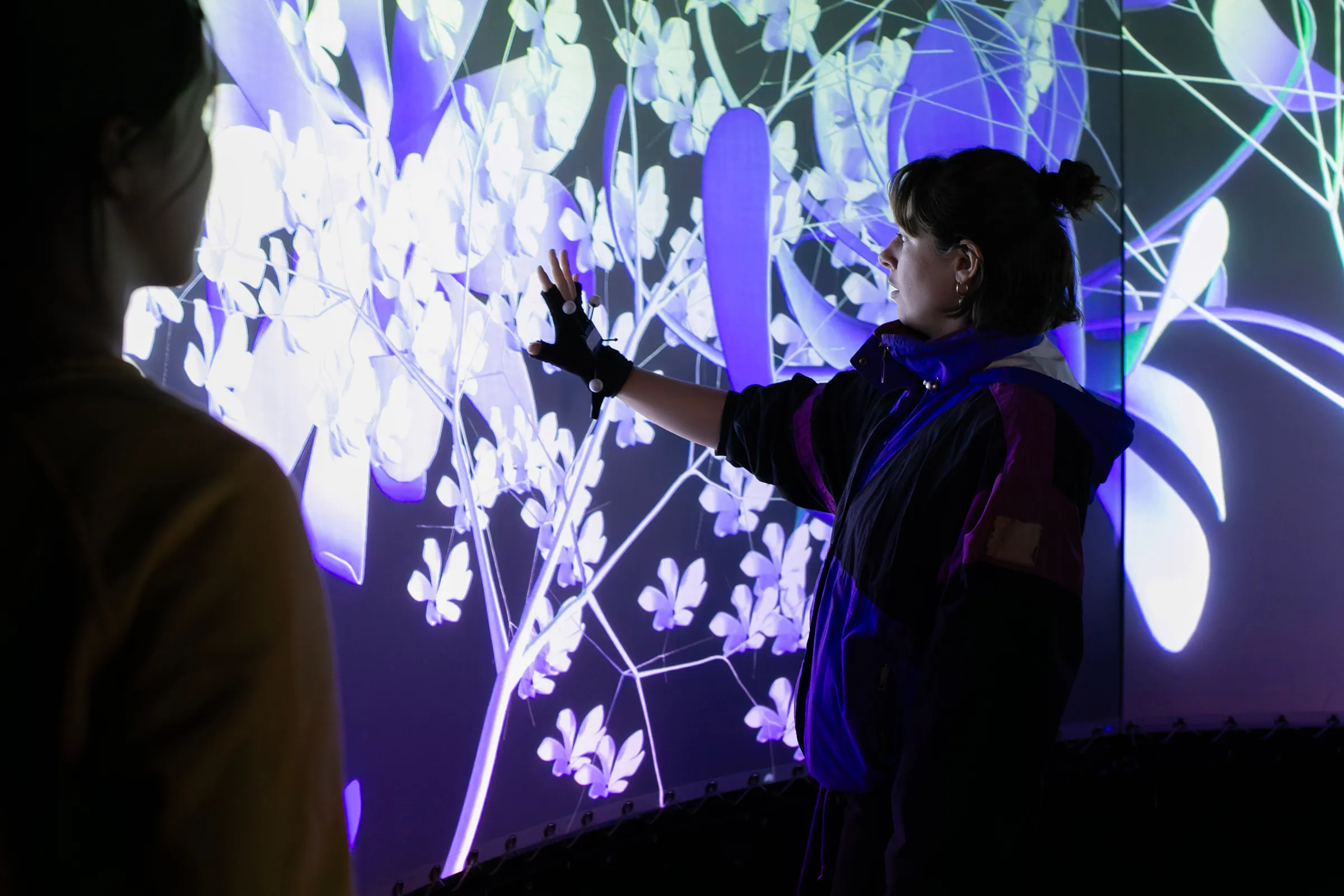
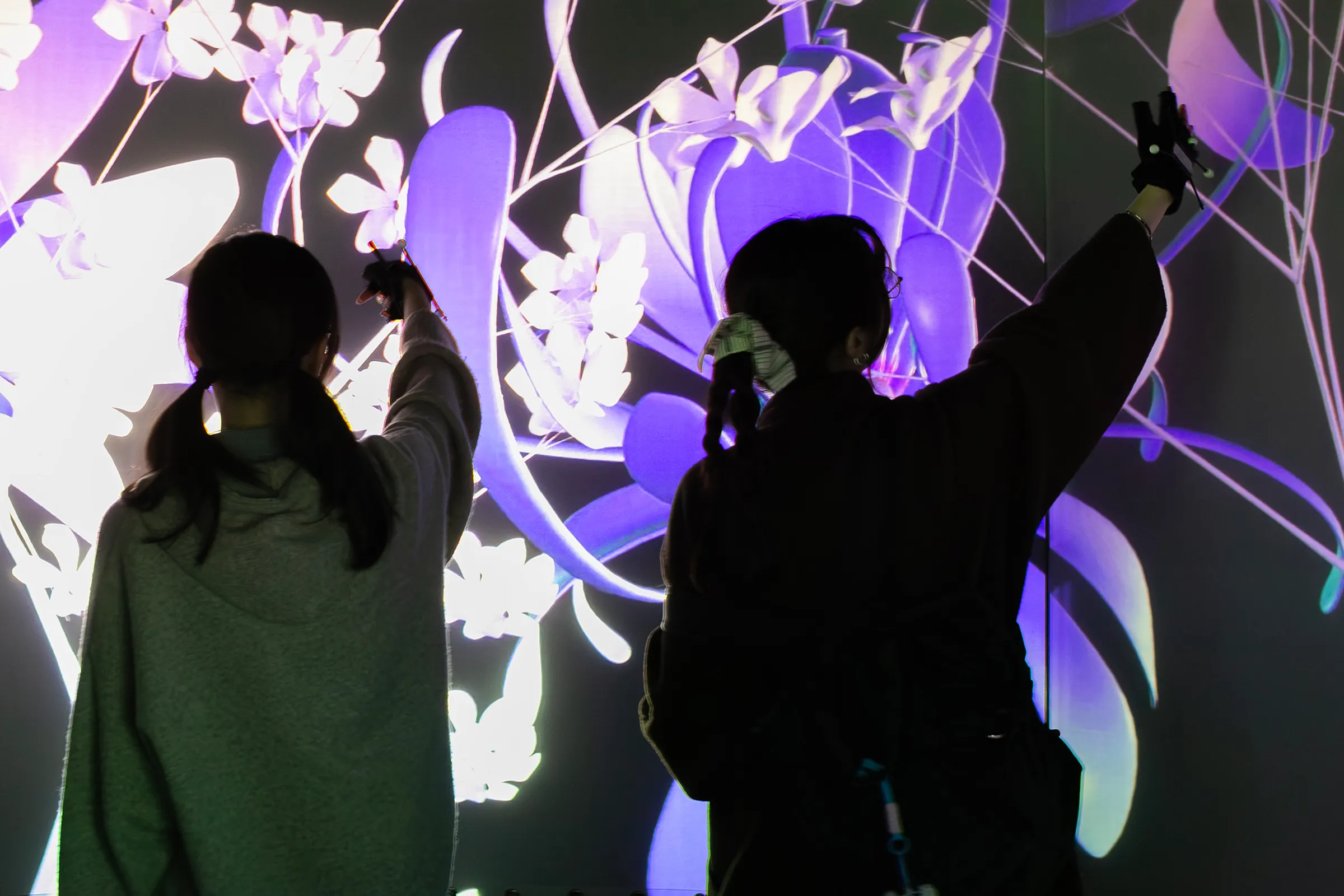
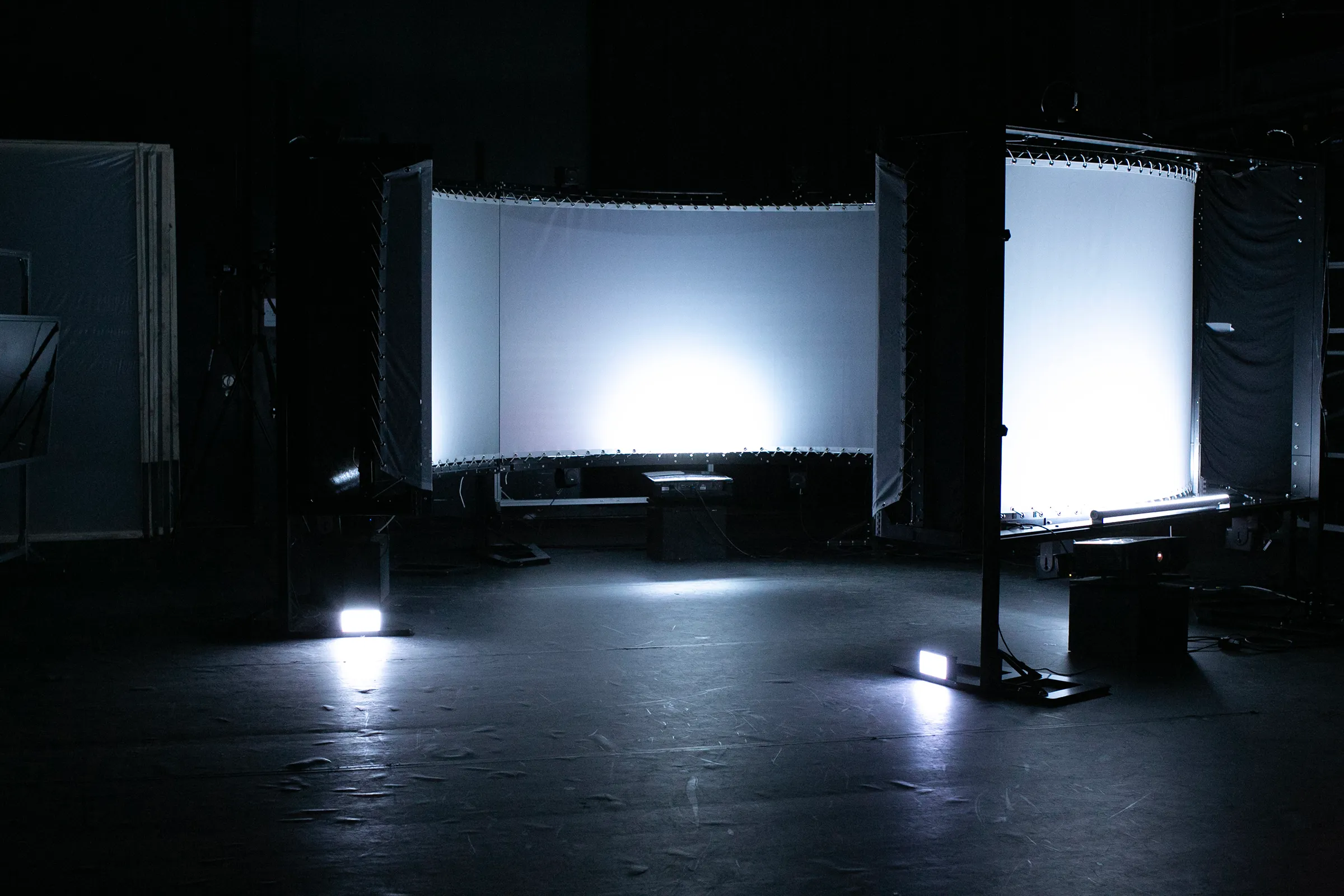
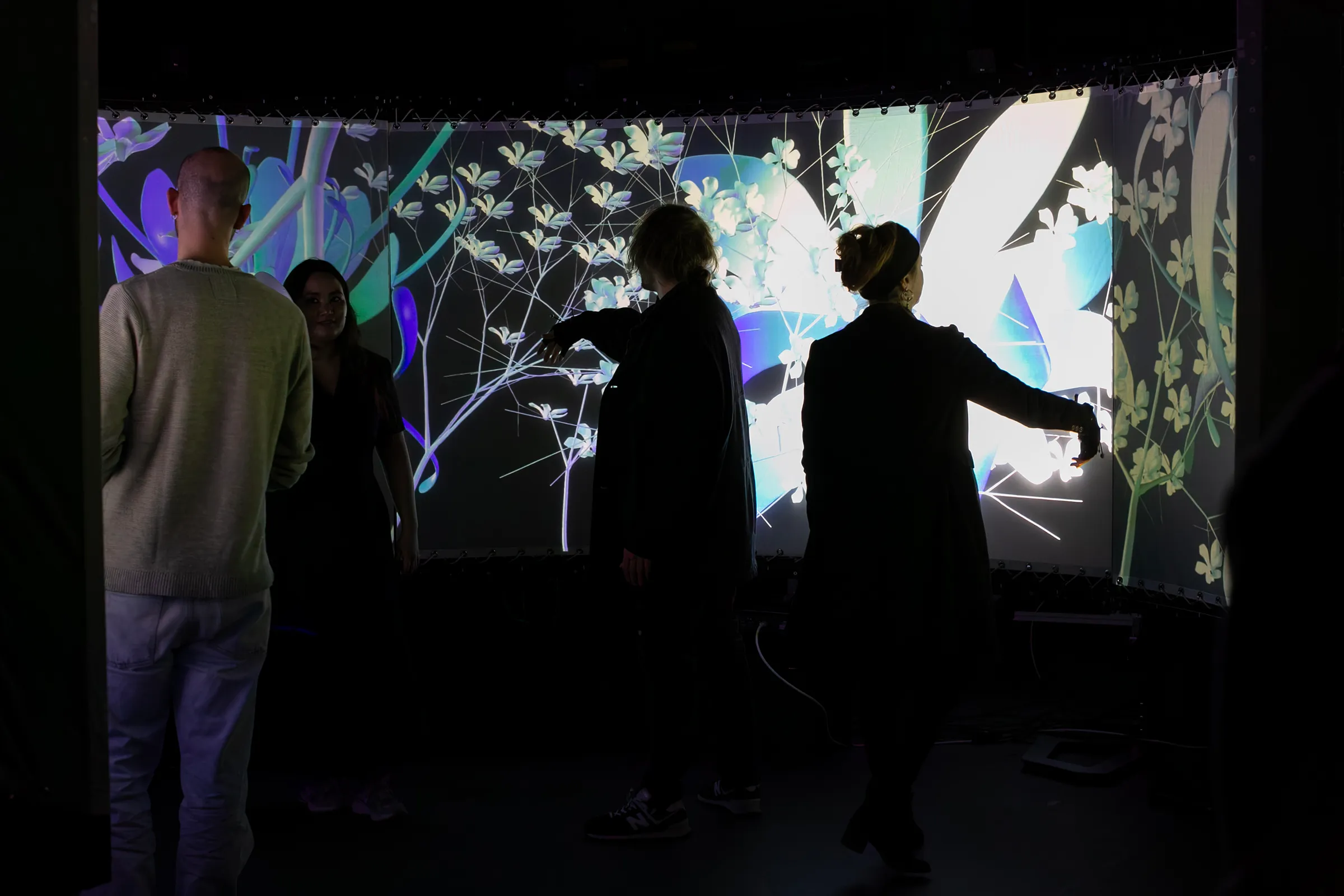
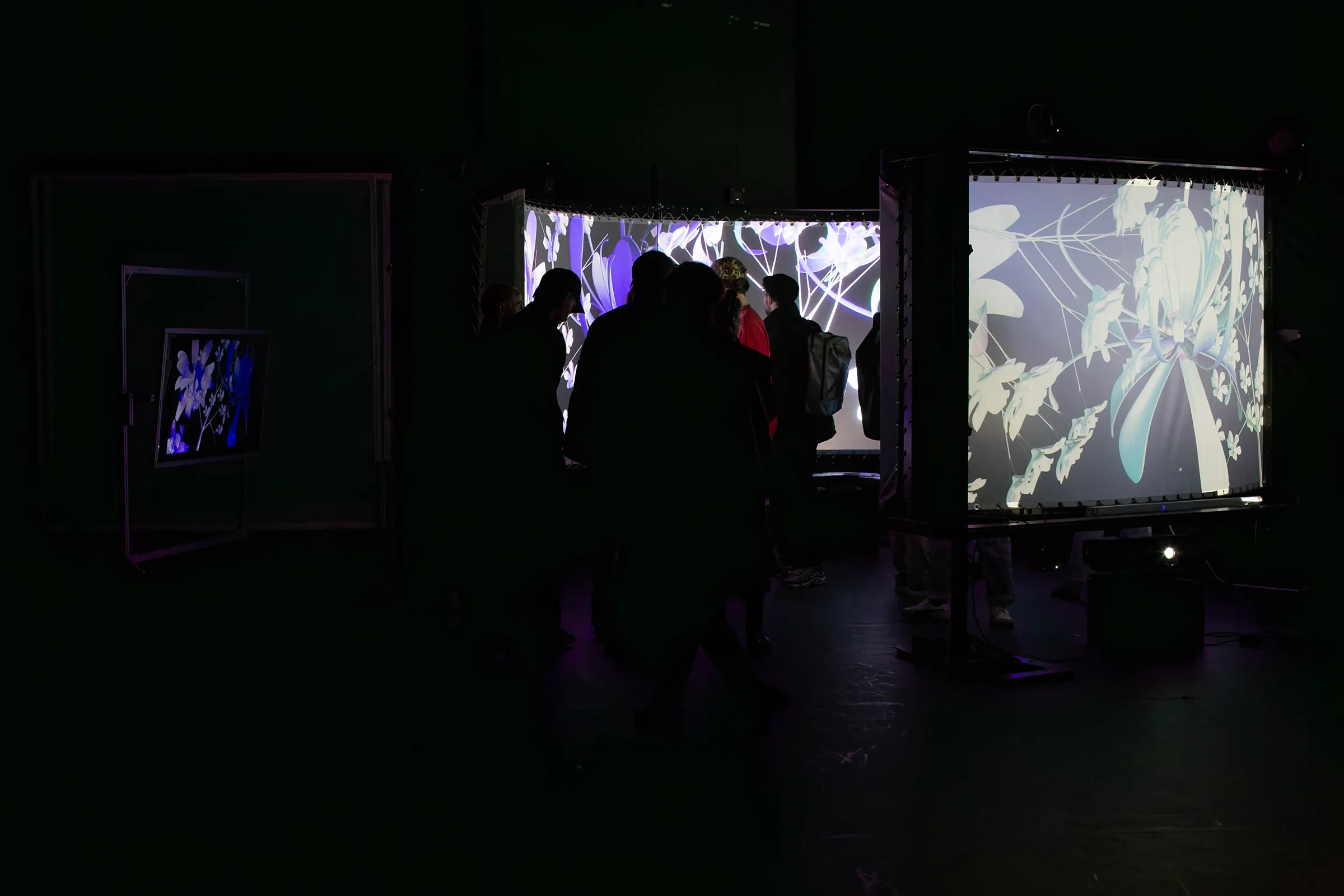
The concept of Floral Rebound evolved from the curiosity of how ecosystems thrive in spaces left behind by human activity, specially under conditions of toxicity or environmental damage. This collaborative project, combining projection mapping, sound design, light design, and 3D modelling, explores the paradoxical relationship between human presence and natural growth. Consisting of a 300° enclosure, with four flexible projection surfaces, participants were surrounded in a continuous visual field. The aesthetic direction leans in a speculative, post-apocalyptic ecosystem, where flowers are actively shaped by human presence. The interaction is designed as an embodied experience within the circular installation. A pulsating light invites participants to step in, and upon entering, digital flowers begin to grow. Each participant wears a glove, allowing their movements to be tracked. The distance between the participant’s hand and the projection surface directly influences the generative growth of flowers. Closeness causes flowers to multiply and grow. Farness causes the flowers to retract. Participants explore the cause-and-effect relationship of their movements. They become temporarily responsible for shaping the virtual ecosystem, witnessing how their presence affects the digital flowers in real time.
Role and responsibilities
Focused on projection mapping of the semi-circular installation and the logic behind the growth of flowers with L-System algorithms in MaxMSP and TouchDesigner based on motion tracking data.
Process
Researching. Conceptualise—understand different layers of interaction—pinpoint tasks—choose technology—explore data and define interaction.
Prototyping. Extract motion tracking data—implement logic behind interaction—adapt L-System with flower models—join growth with light and sound system.
Testing. Test prototype—exhibit in the Immersive Arts Space (IAS).
Reflection
This was a collaborative project of the Minor Immersive Arts Space, where we were able to combine ideas of motion tracking, light and sound performance. It was my first time working in this environment and with this technology, and I particularly enjoyed how embodied the interaction felt and how engaged the audience was. It is the cause of the spark I have on further researching how extended reality affects interaction.